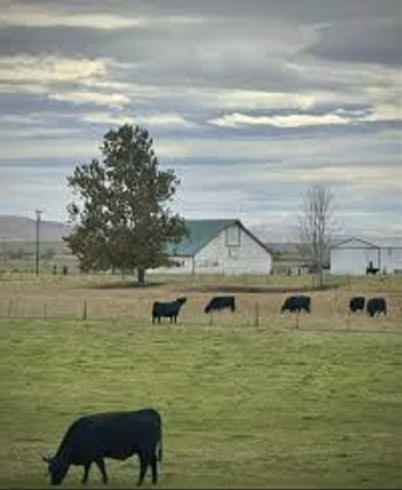
The Rise of Dairy Farming
By the late 1800s and early 1900s, dairy farming became the dominant agricultural industry in the Snoqualmie Valley. The region’s mild climate, abundant rainfall, and fertile soils made it ideal for raising cattle and growing hay. Scientific advances in dairying and improved transportation helped turn the valley into one of western Washington’s important dairy-producing regions.
Family dairy farms appeared throughout Carnation, Duvall, Fall City, and the surrounding valley floor. Most farms included open pasture, hay barns, milk houses, and modest farmhouses. Milk was shipped to Seattle and nearby communities by riverboat and later by railroad.
Historic farms such as the Andrew and Bergette Hjertoos Farm became lasting symbols of the valley’s agricultural heritage. Norwegian, Swedish, and other immigrant families helped establish a strong dairy farming culture that lasted well into the twentieth century.
Although Ames Lake itself was not a major farming center, it was closely connected to this agricultural world. Residents traveled into Carnation and the surrounding valley for supplies, trade, schools, and employment. The roads and trails linking Ames Lake to the valley were originally developed during the logging and farming era.