A look at our community's past

Category: Ames Lake (Page 1 of 7)

When Everyone in Ames Lake Knew Everyone

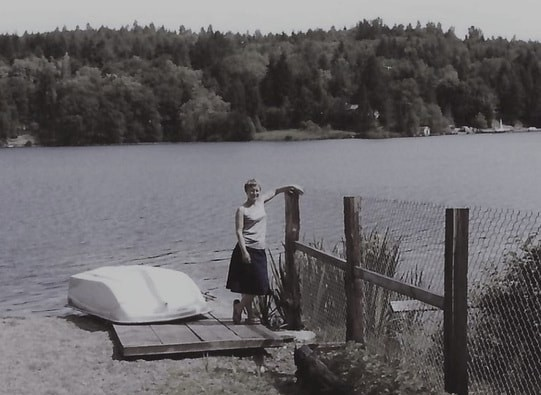
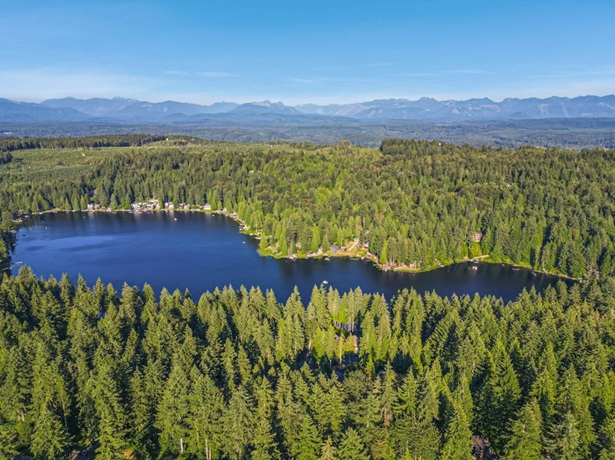
The first time Charlotte Fykerud saw Ames Lake was in 1962. She was invited by a homeowner’s friend to go fishing on the lake, which was stocked with trout. She remembers there were very few houses then, and the vegetation continued all the way down to the water.

“It looked so dense and primeval,” she said.

In 1965, Charlotte and her husband Jack bought a little cabin on the west side of the lake. After being there for just 5 days, their eldest son Eric was born, followed by their son Kurt in 1968. There were not many families here at the time and only two had children the same age.

Ames Lake Community Club meetings

One of the first things Charlotte and Jack did when they moved here was to attend an Ames Lake Community Club meeting. The Community Club was initially formed to deal with the issue of public fishing on the lake. It was discussed for months.

“In 1965, everyone in the community knew everyone,” Charlotte said. “There was no formal process for meeting, we just met.”

“Sometimes the women around the lake had coffee together and gossiped. Several of the conversations we had were about the awful phone service around the lake. You could call Carnation, Fall City, Snoqualmie, and North Bend, but Redmond was long distance. If you wanted to call there, you had to go down to the store, located where the gas station at 244th is now, and use a public phone mounted to the outside wall. Otherwise, the rates added up quickly.”

Charlotte and Jack bought the lot she lives on now in 1969, also on the west side of the lake. Construction began in March 1970, and they moved there in July of 1973.

“I love it here,” Charlotte said. “When I look around the lake now, even with all the houses and lights, it still doesn’t look that populated. I’m never going to leave Ames Lake.”

Growing Up in Ames Lake – the 1970s

Kim Ross moved to Ames Lake with her family in 1970 when she was 7 years old. They were living in Santa Barbara when her parents, both teachers, decided to move back to the Seattle area. Her mother had grown up here, as had her grandmother.

Kim’s parents looked for property all around King County. One day they found a flyer for a house on Ames Lake. Owned by the Cartozians, a prominent Seattle family, the house had been on the market for three years. They were asking $67,000.

The night before they went to see the house, Kim saw it all in a dream.

“I saw the house, a woodshed, a jar on a shelf inside the woodshed, and a German Shepherd at the door.”

The next morning when they got there, the jar was right where she saw it in her dream. The dog was there too. As far as Kim was concerned, the house was meant to be.

The Cartozians

The Cartozians originally built a small log cabin on their property, which they purchased in 1946. In 1963, they hired an architect to design a new, bigger house. The cabin was lifted up, a foundation was laid, and the cabin was put back down on the same spot. You can still see the original logs in the walls of the 5,400 square foot house, where Kim still lives.

The community was a lot smaller in the 1970s. The kids all knew each other from riding the bus to Fall City Elementary School or to the junior high and high school in Snoqualmie. In the summer, they played together in the lake, swimming and boating to each other’s houses.

The Ames Lake Community Club meetings were fun events. Held at the Grange, as they are now, there was always a potluck, the kids played, and everyone gossiped. The whole community fit into that one room.

The train depot

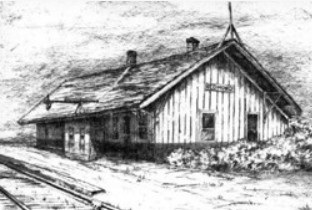
In 1971, Kim’s father, Bowman Ross, heard the Redmond train depot was for sale. It was just $10.00. He bought it, and with the help of his three young daughters, he slowly dismantled the building over the next three months.

He then used the lumber to build a stable on their property, which became home to three horses – Laddy, their Welsh pony from Carnation Farms, another Welsh pony owned by their neighbor, Sharon Miller, and an Arabian Quarter Horse that belonged to a friend in Seattle. Kim and her sisters, Leigh and Mary, rode the horses up on the logging trails, which are now 289th and 290th streets.

“The surrounding area was all wilderness then,” Kim reminisced. “An abandoned apple orchard was tucked into the forest, and there were mud puddles brimming with polliwogs. Ames Lake was a happy place to grow up.”

The Physical Geography of Ames Lake – Interesting Facts

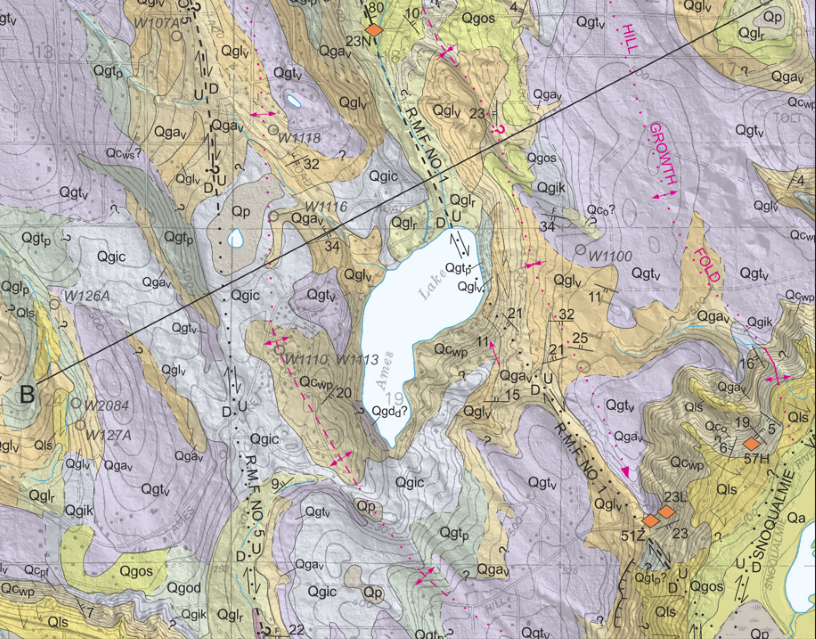
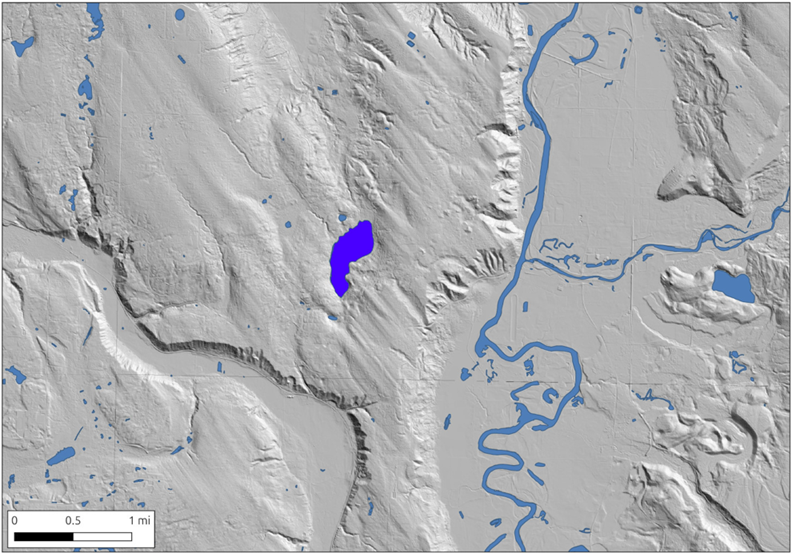
Ames Lake is located in Eastern King County, Washington, at Latitude 47o 38’ 40’’ North and Longitude 121o 57’ 20’’ West. It is within Section 19 of Township 25 North, Range 7 East.

The lake surface is at Elevation 240 feet above mean sea level (NGVD 1929 datum).

The area of the lake is 80 acres. It is roughly kidney-shaped and is about 0.6 miles long (north-south) by 0.25 miles wide in the north half, narrowing to about 0.1 miles wide in the south half.

Volume of the lake is about 1400 acre-feet.

The lake is within the Snoqualmie River Basin and has a drainage area of 1.84 square miles.

The lake has an inlet stream along the northwest side and an outlet stream at the north end. The outlet stream follows Ames Lake-Carnation Road down to the Snoqualmie Valley, where it eventually enters the river about 3-1/2 miles north of the lake.

The mean depth of the lake is 18 feet, and the maximum depth is 28 feet, which occurs near the south end of the lake.

Shoreline length of the lake is 1.5 miles.

References

Bortleson, G.C., Dion, N.P., McConnell, J.B., and Nelson, L.M. (1976). Reconnaissance Data on Lakes in Washington, Volume 2, Washington State Department of Ecology and U.S. Department of the Interior Water Supply Bulletin 43, Volume 2.

Topographic Map of the Carnation, Washington 7.5 Minute Quadrangle (photo revised in 1973), U.S. Geological Survey.


A Brief History of Tanner Electric Cooperative

Tanner Electric Cooperative was founded in 1936 as the “Mutual Power and Light Association of Tanner.” They provided electric service for people in the southeast area of North Bend who could not afford to pay the costs required by the power company.

The Cooperative’s original group approached the Rural Electrification Administration, and with the assistance of J.D. Ross (then Superintendent of Seattle City Light), they were able to obtain the first R.E.A. loan in the State of Washington. This $13,000.00 loan made it possible to construct 13 miles of line to 32 members. By the end of 1937, the contracts were set, and the Cooperative had their first 32 members. They purchased 6,000 kWh from Seattle City Light’s Cedar Falls plant, and the revenue that first year was $286.67.

From 1937 to 1947, all the Cooperative’s power was purchased from Seattle City Light at Cedar Falls. In 1947, they signed the first contract with the Bonneville Power Administration and began to purchase Bonneville power from Seattle City Light. The arrangement with Seattle continued until November 1966, when a new Bonneville contract shifted the point of delivery for power in the North Bend area to the North Bend substation of Puget Sound Power and Light Company.

Purchasing power from Puget Sound Energy

In 1954, the residences of Ames Lake tried to obtain power from Puget Sound Energy, but they were not successful. Later that year, Tanner Electric signed a contract with Puget Sound Energy to purchase power that would serve Ames Lake. That year, Tanner Electric constructed the necessary lines and began service to approximately 50 members.

By 2016, North Bend served 2,073 meters and Ames Lake served 1,450 meters.

In 1960, the Rural Electric Association (REA) asked the Cooperative to serve Anderson Island. They installed a two-mile submersible cable, and in late 1961, the first 44 members were connected.

By 2016, Anderson Island served 1,176 meters.

Tanner Electric membership

We have experienced quite a few changes since then. We now have 4,699 meters, both residential and commercial, within our membership.

Tanner Electric Cooperative is a non-profit utility company that puts people and community, not capital, at the center of their business. They contribute to the community through various organizations, such as the Snoqualmie Valley Rotary, Little League sponsorship, and the Snoqualmie Valley Chamber of Commerce. They also provide scholarships to our local high school students whose parents are members of the Cooperative.


Farming and Rural Life in the Snoqualmie Valley – the Ames Lake Connection

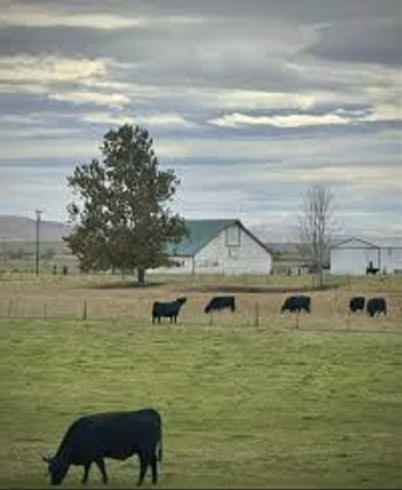
Nestled between Redmond and Carnation, the Ames Lake area has always existed on the edge of the rich agricultural lands of the Snoqualmie Valley. While Ames Lake itself became better known in the twentieth century as a rural residential and recreation community, its history is deeply tied to the farming traditions that shaped the entire valley for more than 150 years.

Long before modern roads and neighborhoods appeared, the Snoqualmie Valley was a landscape of forests, rivers, prairies, and fertile floodplains. Native Snoqualmie people used the valley seasonally for fishing, gathering berries, and harvesting roots. Later, Euro-American settlers recognized the valley’s extraordinary agricultural potential and began establishing farms in the mid-1800s.

Early Settlement and Farming

Permanent settlement in the Snoqualmie Valley began in the 1850s and 1860s. Early pioneers such as Jeremiah Borst and other homesteaders claimed land along the river and open prairie areas. These first farms were small and largely self-sufficient, producing vegetables, grain, livestock, and dairy products for local use.

Much of the lower valley, however, was still heavily forested. Logging often came first. Settlers worked in logging camps while gradually clearing land for agriculture. Trees were felled, burned, and removed over years of hard labor before the land could support crops or pasture. Farmers frequently supplemented their income by producing cedar shakes, shingles, and timber products.

The Ames Lake area followed this same pattern. The surrounding hills were heavily logged in the early twentieth century, especially during the 1920s. Old railroad grades and logging routes can still be traced through the woods around Ames Lake today.

Ames Lake Water Association – How Our Water System Came to Be

When Ames Lake was discovered In the 1950s and 1960s, and the Eastside became more populated, people started living in vacation cabins for longer periods of time. In the Ames Lake/Tolt Hill area, more houses were being built.

The notion of having an area-wide water system sprang up in the mid-1960s. Some residents in the Ames Lake area wanted to form a local water district. They petitioned the King County Board of Commissioners. Before then, early residents obtained non potable water from outside sources, or had their own wells drilled. But drilling for water on Tolt Hill was always a “hit or miss” proposition and over the years, it caused a number of “dry wells.”

However, some residents were opposed to the formation o f the water district. They believed the area’s population didn’t justify it and a system of using wells was questionable. Those residents were told their properties could be deleted from the proposed district.

Ames Lake Water Association (ALWA) was born

Later, residents evaluated the creation of a private water company and a water utility cooperative. By the late 1960s, they decided to form a water utility cooperative.

In April 1969, the Ames Lake Water Association (ALWA) was born and a Board of Trustees was elected. They created bylaws and Articles of Incorporation, and engaged an attorney and an engineer. They also applied for a construction loan from the Farmers Home Administration. It was obtained in December of 1969. Thus, the Ames Lake Water Association started as a federally funded rural water cooperative.

Planning system construction

The system’s planning and design continued through 1969, and by February 1970,  construction began. The general contrator was A & J Utility Contractors. The engineering firm of Lee Johnson & Associates, based in Everett, administered the construction contract. In early 1971, the construction was completed.

During the project, original ALWA Board members Jim Hickman and Fred Cartozian represented the Association. Some residents, now members of the Association, pitched in to dig ditches and helped install the first water mains.

Water service for some members began in May 1970. At that time, the Association had 87 members. The new system service area included the Ames Lake Vista and Ridgehaven areas . One of the original two wells, the Vista Well No. 1, was located adjacent to the current Association office.

« Older posts