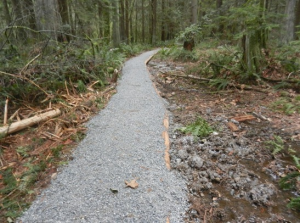
Hiking at Ames Lake Forest began with Native American trails and was significantly shaped by the logging industry in the late 19th and early 20th centuries, which cleared the land and left behind remnants of old logging routes that became informal trails.
In the mid-20th century, following logging and replanting, the Evergreen Mountain Bike Club established new trails, which King County Parks later improved, creating the current hiking, biking, and equestrian trails used today.
Indigenous Trails and Early European Impact
Native American Trails:
Before European settlement, Indigenous peoples, such as the Tuobeda’bš, used trails in the area for hunting, trade, and ceremonies.
Logging:
From the late 1800s to the early 1900s, logging operations heavily influenced the landscape. Logs were moved via flumes and skid roads, the remnants of which could be seen in the area, creating a de facto network of trails.
20th-Century Development and Trail Creation
Replanting:
Following extensive logging, the area was replanted, primarily with Douglas Fir trees.
The Evergreen Mountain Bike Club:
In more recent decades, mountain bikers from the Evergreen Mountain Bike Club created and improved trails in the area, laying the groundwork for current recreational use.

Very interesting. I’d sure be curious to know which, if any, trails we have now have a longer history than just from logging and biking activities. The trail down the ridge to Tolt McDonald Park, for example, could be one of them since it’s a pretty natural path through the very steep topography.
Thanks, Joel. Good idea.