A look at our community's past

Author: Leslie (Page 4 of 6)

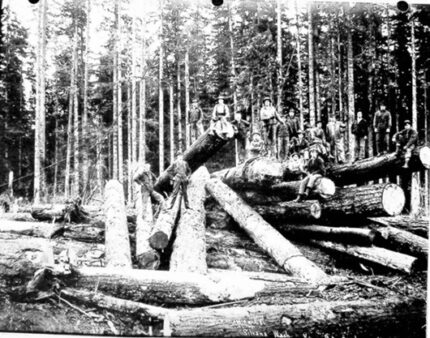
Logging in the 1890s

For many decades, the heavily wooded areas along the Snoqualmie River and its tributaries provided a substantial income for logging and milling companies . As the lowland timber was removed, the cleared land was used for farming.

During the 1870s, the lumber technology evolved from hand sawing and hewing to small water-powered sawmills. Steam donkeys were commonly used for logging operations. The logging companies dumped their logs into the Snoqualmie River, formed them into booms, and had sternwheeler boats tow them to sawmills downstream in Everett.

Siler logging in Ames Lake

The most prominent logging companies during this boom period included Cherry Valley Logging, headquartered in Stillwater, and Siler logging, based in Ames Lake. Both companies harvested and milled timber in the vicinity, employing many local residents.

As late as the 1920s, there were still many old growth trees in the area east of Redmond. Logging was dominated by the Siler Logging Company. Felled trees were taken north by means of a specially built 25 mile railroad, which ran from Ames Lake to Bromart, just south of Snohomish.

From the mid-1880s until the end of World War II, logging and its related sawmilling was the largest industry on the Eastside.

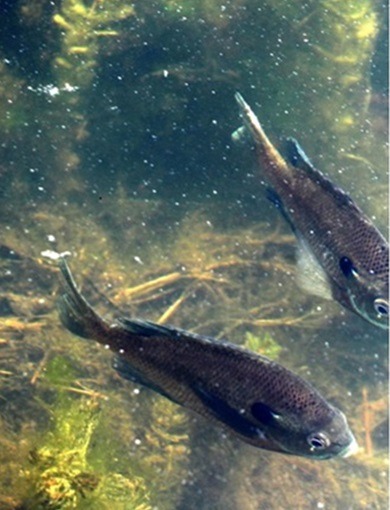
The History of Fishing in Ames Lake

From 1951 to 1962, the state frequently restocked the lake with fish and permitted large numbers of fishermen access.

In 1962, regulations were adopted that stated the lake was to be considered private, for the exclusive use of those owning lots within the plat. The regulations also stated that motorboats with gasoline engines would not be allowed.

Today, largemouth bass, yellow perch, and rainbow trout are all caught in Ames Lake.

How Ames Lake Grew Up

In the early 1900s, John Ames built a home for his family on the west bank of the Snoqualmie River. It was just downstream from the mouth of the Tolt River, presently Tolt-McDonald Park.

In those days, there was no electricity or running water in the area. Most families came here for the day or camped for the weekend.

Ames built a ferry, which ran on a cable, and charged a small fee to carry passengers and wagons across the river.

John Ames’ son Arthur was killed while working on the railroad. His father named Ames Lake in his honor.

Ames Lake was platted in 1941 and registered in 1942.

From 1951 to 1962, the state frequently restocked the lake and permitted large numbers of fishermen access. On the opening day of fishing season, you could walk across the lake from one boat to another.

In 1962, owners of property within the plat adopted regulations stating that the lake should be used and developed exclusively for the private and recreational use of the residents. It also stated that motorboats would not be allowed.

In 1966, Ames Lake became a private lake. It is one of the only private lakes in Washington State.

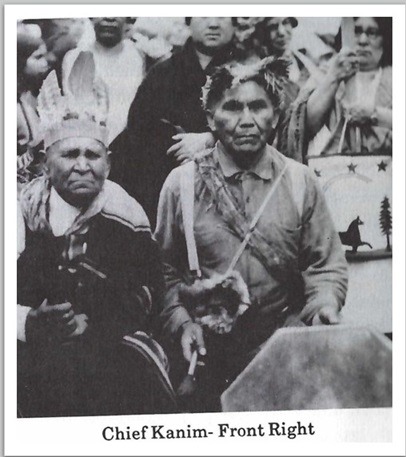
The Snoqualmie Tribe

The Snoqualmie Tribe was a major tribe in this area, and they were wealthy and powerful. They were among the tribes who were friends and helpful to the settlers.

The Tribe had several villages. One was in the flats of Fall City where they trained their braves. Another was near Tolt-McDonald Park in Carnation where they hosted people from other tribes.

When warring tribes started fighting, the Snoqualmie’s would send signals up the river to give everybody time to mount a siege from the bluff above Tolt-McDonald Park (an upland area between Ames Lake and Carnation, known today as the Ames Lake Tree Farm). They used Ames Lake as their water source so they could keep a siege going for as long as they needed to.

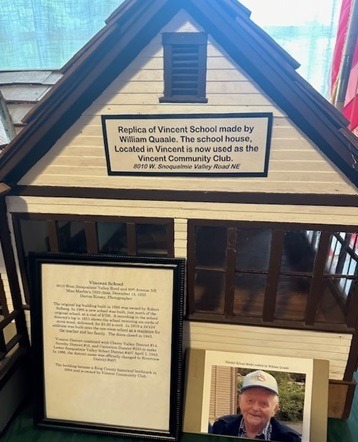
Vincent Schoolhouse (1905)

The small farming community of Vincent was located on the western side of the Snoqualmie Valley, south of Carnation. In 1905, residents built a schoolhouse so their children could attend school close to their homes.

The school housed all grade levels and included students from many pioneer families in the Snoqualmie Valley. About 20 students at a time attended the school. Teachers were typically hired for two- or three-month terms in the fall and spring, seasons when parents could release the children from their farming duties to attend school. The milder weather also eased travel for the students from outlying farms.

The school closed in 1942, but the Vincent Community Club still used the building for social and community events.

« Older posts Newer posts »